Frequently asked questions
General information about hearing aids
How do hearing aids work?
Hearing aids are electronic devices that pick up and amplify sound. They increase the volume of sounds that you normally wouldn’t hear, so you can.
The hearing aids we offer at Bloom Hearing Specialists do much more than amplify sound. The aid’s sophisticated circuitry is programmed by our hearing care professional to suit your unique hearing loss, and the high-tech features are selected based on your lifestyle.
Our hearing aids will not only improve your hearing, but your life.
How do hearing aids work in a technical sense?
At their most basic, hearing aids are microphones that convert sound into electrical signals.
An amplifier increases the strength of the signal, then a receiver converts it back to sound and channels it into the ear canal through a small tube or ear mold. A battery is necessary to power the hearing aid and to enable amplification.
What advantages are there in having two hearing aids?
The main advantages in having two hearing aids are:
- Help with locating sounds
- Helps hearing better in noisy situations
- Hear speakers on both sides of you
- Balanced hearing levels
Some studies suggest that it may be helpful in the long term to keep an ear stimulated rather than leaving it without a hearing aid.
Your hearing aids will be marked red and blue. Red will always be for the right ear. The blue will be for the left ear.
How many years should I expect my hearing aid last?
What are the different types and styles of hearing aids?
Today’s hearing aids come in a wide variety of sizes and styles — from those that sit behind the ear to completely invisible hearing aids — and feature different technology levels to match your specific needs and budget.
We at Bloom Hearing Specialists offer all modern hearing aid styles. Book a free appointment with our Audiologist at your local Bloom Hearing Specialists store to find out more. As well, you can contact us at 1800 554 968.
What is the difference between analogue and digital hearing aids?
Digital Hearing aids offer far better sound quality and clarity and have largely taken the place of analogue ones. They have a tiny computer inside which processes sounds and this makes it possible to customize them very precisely to suit each individuals hearing loss.
Many digital aids can be programmed with different settings for different sound environments; for example, one program for a quiet living room and another for a noisy restaurant.
Will I need one or two hearing aids?
Two-ear hearing (called "binaural") is better than one. If you have hearing loss in only one ear, you may only need to wear a hearing aid in your bad ear. However, wearing two hearing aids has been proven to improve speech understanding in noise, localization (finding the source of sounds), and overall sound quality when compared to wearing only one aid.
Age and noise-related hearing loss tend to affect both ears, but your hearing profile for each ear is probably different. If there is a loss in both ears, you will probably benefit more with a binaural solution. Today, more than 80 percent of all hearing aid fittings are binaural, or involve both ears. People report a higher level of satisfaction than purchasers of a single hearing aid.
You can book an appointment with our Audiologist or call us at 1800 554 968 and discuss the degree of your hearing loss with us.
Usage of hearing aids
How do I turn my hearing aid on and off?
To turn the hearing aid on, close the battery door. To turn the hearing aid off, open the battery door.
It is not harmful, but not necessary, to remove the battery completely from the hearing aid.
Is it OK for me to sleep in my hearing aids?
When going to bed for the night, you should remove your hearing aids and open the battery door to help conserve battery life.
Can I wear my hearing aids when I take a shower, bath, or when I swim?
Even with the water resistance capabilities of modern hearing aids, we recommend you remove your hearing aids prior to any aquatic activity.
What does the button do?
How to tell the right hearing aid from the left hearing aid?
Your hearing aids will be marked red and blue. Red will always be for the right ear. The blue will be for the left ear.
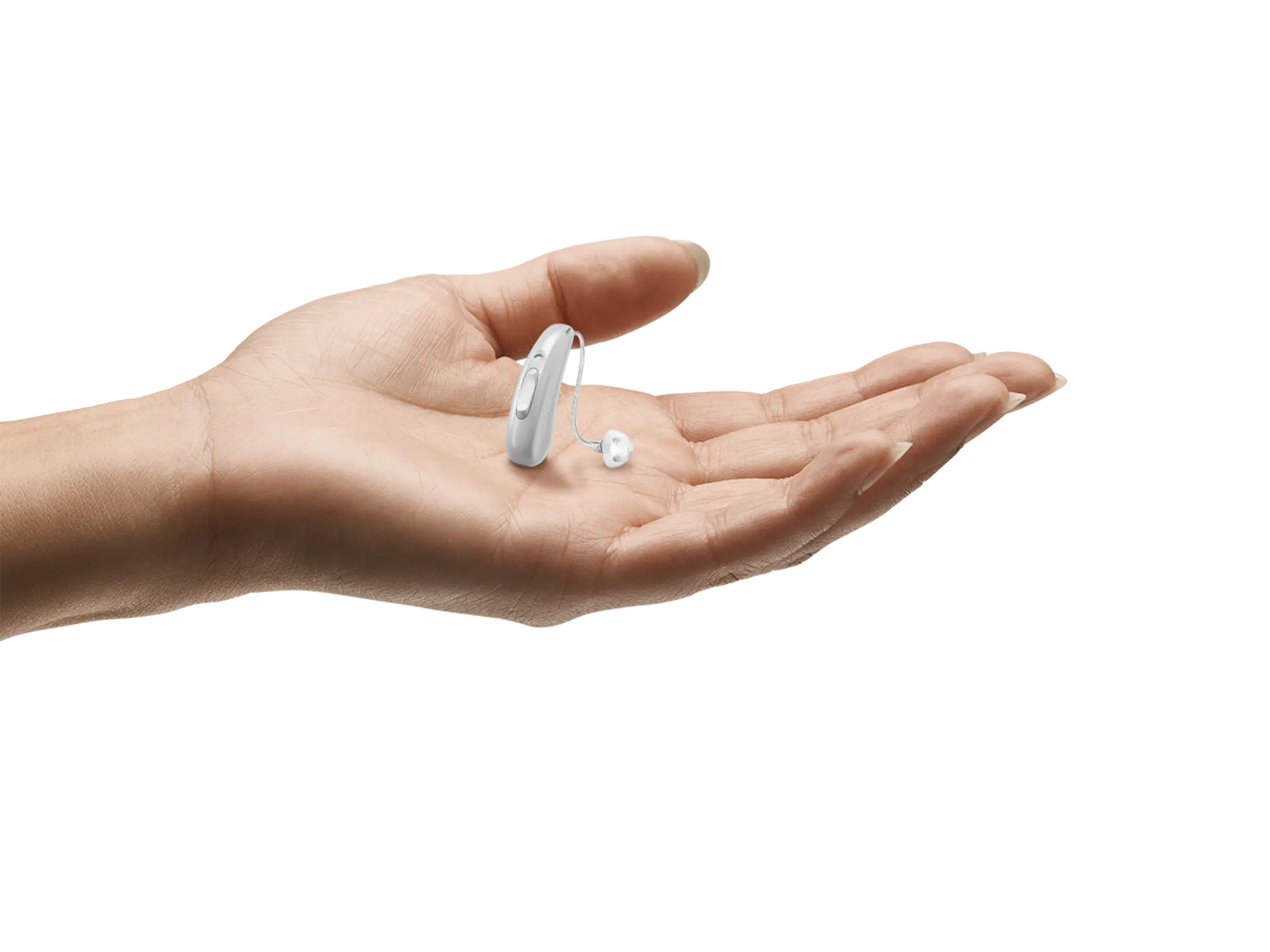
What is the white thing at the end of hearing aid that goes into my ear?
That is the wax filter. It is there to prevent wax from getting into the delicate components of your hearing aid.
When this becomes clogged with wax or other debris, you will need to change this to ensure your hearing aid stays in good working order.
What is the hole next to the wax filter on hearing aid?
That is the vent. The vent allows for some sounds to enter your ear naturally as well as provide ventilation for your ear canal.
Natural ventilation is important because it prevents the 'plugged up' or occluded sensation you would get if your ear was completely closed off with the hearing aid.
What is the clear antennae things on my hearing aid?
Some hearing aids have a retrieval cord to assist you with the removal of your hearing aids. When the hearing aid is in your ear, grasp the line firmly and pull to remove your hearing aid.
My custom hearing aid has a volume control. Which way should I turn it to change the volume?
Rotate the volume control wheel forward/towards your face (when wearing the hearing aid) to increase volume. Rotate the wheel backwards/away from your face to decrease volume.
What do I do when my hearing aid sounds quieter than usual / no sound?
First check whether the volume control is working, and whether you can make it louder. To do this, take the hearing aid in your hand and clasp it. The hearing aid should now emit a whistling noise. Check the hearing tube and earpiece for earwax or moisture and clean if necessary.
Check whether the battery is correctly inserted and fitted in correctly. If there is no improvement, replace the battery. If the problem persists, contact your local Bloom Hearing Specialists store by calling 1800 554 968 or booking a free appointment online.
What should I do if the battery discharges too quickly?
How long can I store my batteries? Do they discharge themselves at some point?
All of today's hearing aid batteries work on the basis of zinc and oxygen. That is why you will always find a colored sticker on one side of the hearing aid battery.
This sticker keeps the battery close to airtight. As soon as you remove this sticker, the zinc/air battery is activated by drawing in oxygen through tiny holes. Therefore, you should not remove the sticker until you need the battery.
It is recommended that you remove the sticker from the battery, and wait about 2 minutes, before you insert the battery. If you need immediate assistance, you can call us at 1800 554 968.
What do I do if I hear crackling or buzzing noises?
Check the hearing tube and earpiece for earwax or moisture. Check the hearing tube for damage (colour changes, hardening, or cracks) and replace it if necessary.
If the problem persists, contact your local Bloom Hearing Specialists store for assistance by booking a free appointment online or calling 1800 554 968.
What do I do if my hearing aid whistles?
What do I do if I experience pain or inflammation in my ears?
Why is my hearing aid squealing?
The squealing that you or those around you hear is called feedback. Feedback may occur because something has changed with the way the hearing aid fits in your ear. This can be because your hearing aids need to be cleaned, your ears have accumulated debris in the canal, or your ears have grown (your ears continue to grow as you age).
If you are experiencing feedback, try cleaning your hearing aids and your ears themselves. If that does not stop the feedback, consult your local Bloom hearing consultant. You can book a free appointment online with your local Bloom Hearing Specialists store or call 1800 554 968, where we can assist you on finding the right hearing aids for you.
My ear gets hot & damp when I am wearing my hearing aid, what can I do about it?
A hearing aid stops warm and moist air from escaping from your ear canals - some ear pieces/hearing aids have a small hole or air vent running right through them to allow air to circulate.
Your Audiologist may be able to add this to your ear piece/hearing aid but if this is not suitable, just remove the hearing aid occasionally during the day to allow your ear to ‘breathe’.
If the problem continues, you can contact us by booking a free appointment online with your local Bloom Hearing Specialists store or calling 1800 554 968.
My hearing aid is beeping continuously, what does that mean?
Cleaning and Care of Hearing Aids
Consult with us immediately if:
You experience discomfort or pain despite correct placement of the earpiece.
Earwax can no longer be removed from the earpiece opening.
The earpiece tube is yellow and brittle.
You can no longer adjust to the desired volume because the hearing aid starts to whistle.
Where should I store my hearing aids when they are not in my ears?
How do I clean my hearing aid?
A simple cloth or tissue can be used to wipe down the hearing aids. A brush can be used to help remove more stubborn or stuck debris if necessary.
Refer to the User Guide that came with your hearing aid for more details. Gently clean your hearing aid with a soft, dry towel. Alcohol, solvents or cleaning products cause damage.
If you need immediate assistance, you can call us at 1800 554 968.
How often should I clean my hearing aids?
How often does the wax filter need to be changed?
How do I clean the vent?
How to protect my aid from dirt?
- Always make sure that your fingers are clean and dry before touching your hearing aid. The microphone input is very small and can become blocked if handled improperly.
- Protect your hearing aid from moisture. Remove the hearing aid from your ear before showering, bathing or swimming. Due to high moisture levels, you should not leave it in the bathroom. Occasionally clean your ears before inserting the hearing aids. Moisture and condensation can damage the electronics in your hearing aid. We recommend that you remove the battery from the hearing aid at night and to leave the battery compartment open. You can use special drying systems that are available from your local Bloom Hearing Specialists store.
- Place the aid out of reach of children and pets. Hearing aids that are still switched on and lying around emit high pitched sounds that can irritate dogs. This has resulted in some aids getting eaten by pet dogs.
Important for Behind-the-Ear hearing aids:
Always separate the earpiece from the hearing aid before cleaning it. The hearing aid should never come into contact with water! When you connect the earpiece to your hearing aid, it has to be absolutely dry.
It is best to dry the tube with a puff of air using an air puffer (do not blow air through the tube from your mouth). You can get this inexpensive accessory from your local Bloom Hearing Specialists store.
Coronavirus (COVID-19) Information
Are your clinics still open?
Are any of your staff affected?
What extra measures are you taking in the clinics?
We have always had strict infection control in our clinics – and have now extended them. Our infection control procedures include:
- Strict hand hygiene
- Hand sanitiser being available for customer use
- Disinfection of medical equipment after every use
- Cleaning / disinfection of clinical rooms after every customer
- Multiple cleaning / disinfection of customer spaces during each day
- Wearing appropriate protective items such as gloves, masks and glasses as appropriate.
It is safe to attend your hearing appointments. Our clinic teams only come to work if they are healthy and confident that they have not been exposed to the virus. We have a comprehensive infection control program in all our clinics to ensure all equipment and interior surfaces are clean and safe. You can read about our infection control procedures here.
Is it safe for me to attend my appointments?
What do I do if I have an appointment but I have flu-like symptoms?
What do I do if I have an appointment and recently travelled overseas?